Learning Objectives and Modules
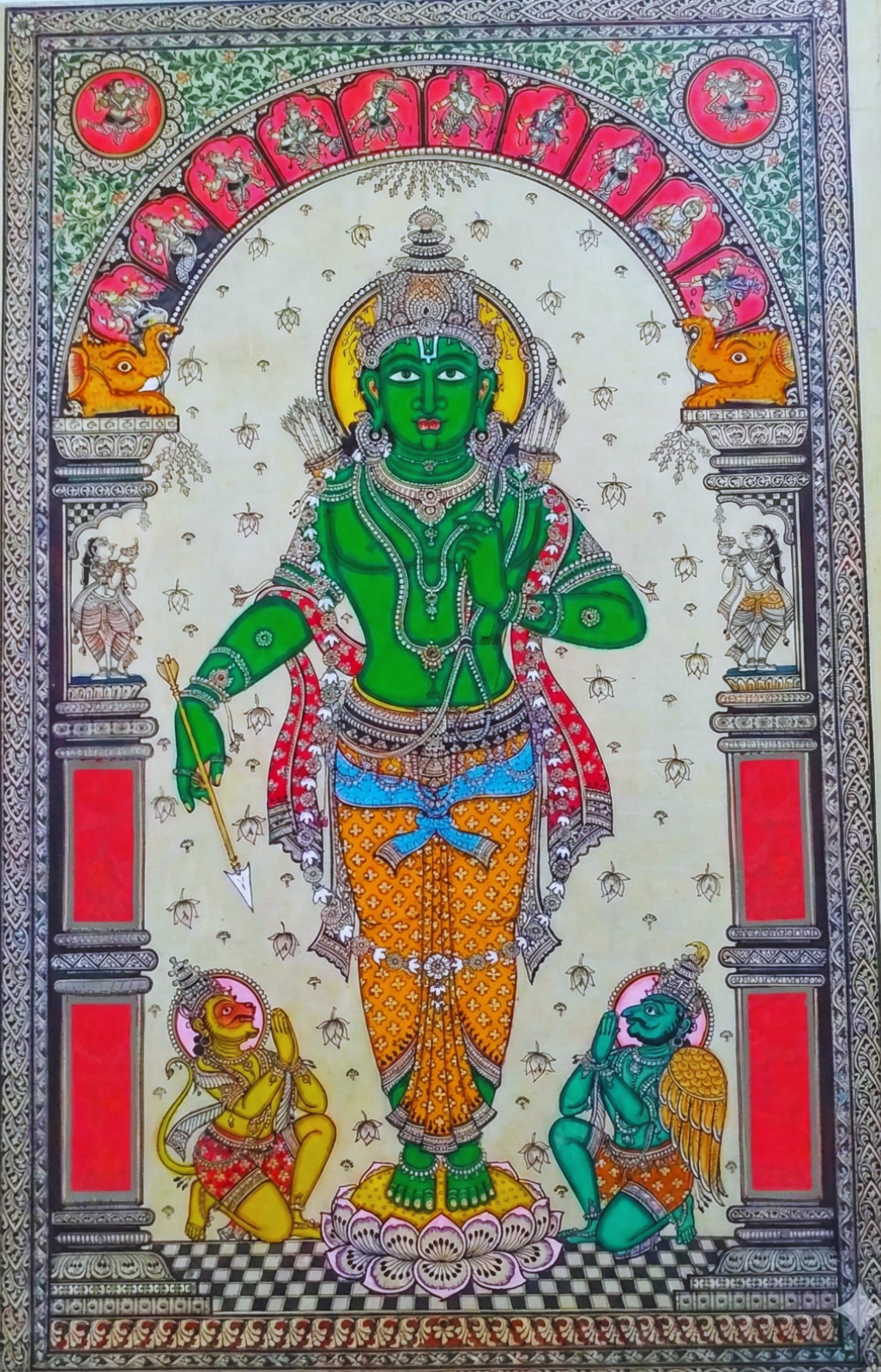
Learn the intricate design and techniques of Pattachitra paintings along with live artist interaction. Also, learn the importance of Ram Rajyabhishe scene, the folk stories behind the paintings, their relevance in modern times, and the peculiar features of Pattachitra painting, from base coloring to detailing.
What we will learn :
- To understand the significance of Ram Rajyabhishe scene in Hindu mythology.
- Detailed knowledge about the process of making canvas and natural colors.
- To develop foundational skills in Pattachitra painting techniques, including line work, color application, and composition.
- To understand and value the cultural and artistic importance of Pattachitra art.
Module Details
Module 1 to 5
Module 1: Introduction to Pattachitra and the Ram Ji
Module 2: Introduction to traditional Pattachitra color palettes and their symbolic meaning, and learn how to do the Base color
Module 3: Focus on Ram Ji's iconographic features, stories, and associated symbolism, and continue doing base color
Module 4: Learn how to outline
Module 5: Learn how to create intricate details and patterns using a fine brush
Module 6 to 10
Module 6: Drafting the kneeling figures of Hanuman and Garuda at the base
Module 7: Designing the Dashavatara circular medallions within the archway
Module 8: Detailed sketching of the architectural pillars and lotus pedestal
Module 9: Application of the signature green base for Rama’s body
Module 10: Base coloring of Hanuman and Garuda in their respective hues
Module 11 to 15
Module 11: Learn how to use appropriate colors for each motif and their garments, based on traditional symbolism
Module 12: Detailing of the design of the background
Module 13: Create elements of Jewelry and detailing work.
Module 14: How to create Jewelry and detailing work
Module 15: How to do detailing with traditional motifs
Module 16 to 20
Module 16: How to do detailing with traditional motifs.
Module 17: How to do detailing work using red color to add details to the figures, including ornaments, facial features, and clothing patterns.
Module 18: How to do inner border detailing with traditional motifs.
Module 19: How to do outer border detailing with traditional motifs.
Module 20: Adding final touches to the painting, refining lines, adding highlights, and ensuring overall balance.