About the Art &Workshop
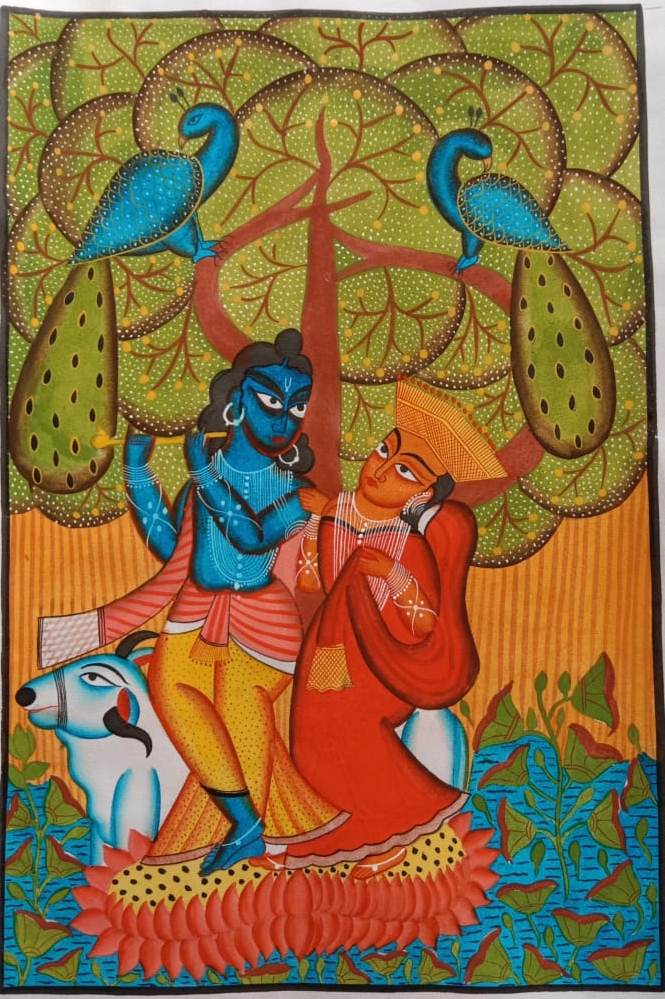
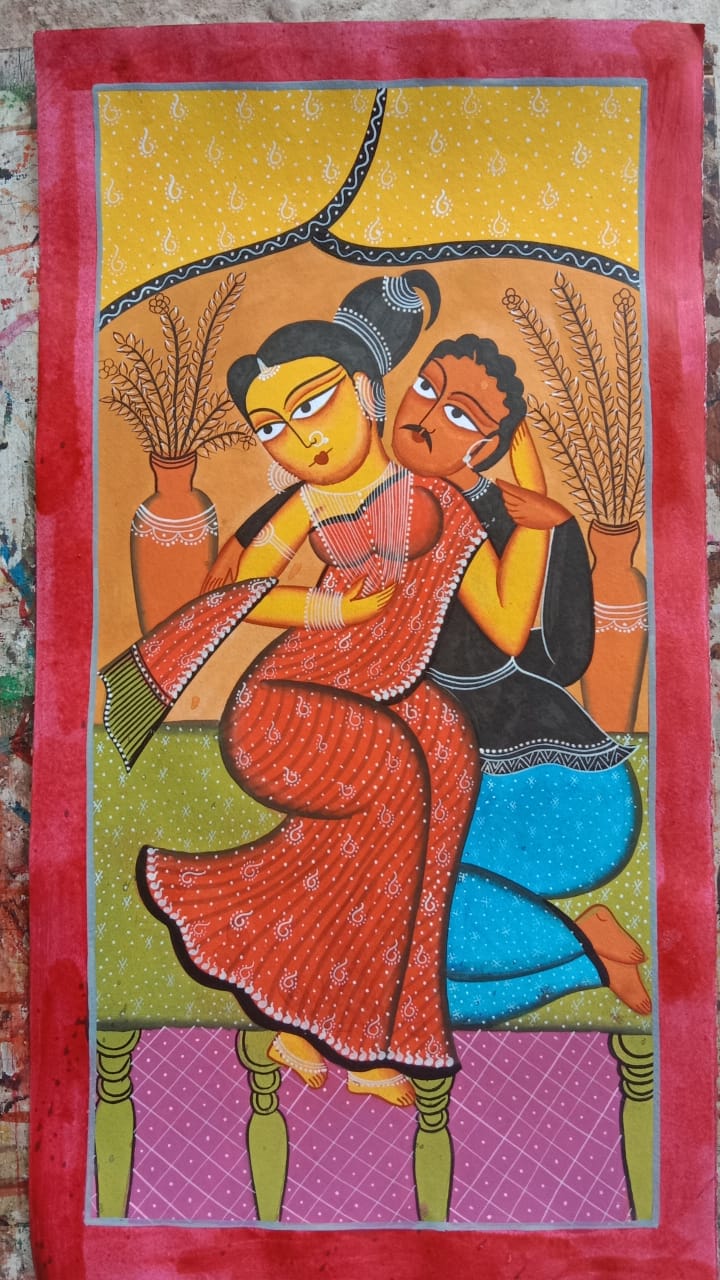
Kalighat painting is a vibrant folk art tradition that originated in 19th-century Kolkata, near the Kalighat Kali Temple. Known for its bold outlines, expressive faces, flat yet striking colors, and minimal backgrounds, Kalighat art tells stories from mythology, social life, and everyday human emotions. Figures are stylized with flowing forms, dramatic gestures, and a strong sense of movement, making the artwork visually powerful and narrative-driven.
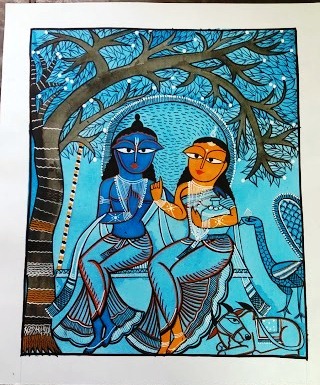
This painting depicts Radha and Krishna in Vrindavan, expressing divine love, joy, and spiritual harmony. Krishna, playing the flute, symbolizes the call of the divine that draws all beings toward love and devotion, while Radha represents pure bhakti, grace, and emotional balance. Their flowing postures and expressive faces convey a deep, timeless bond.
The cow signifies purity, compassion, and abundance, closely associated with Krishna as the nurturer and protector. The peacocks, resting on the tree branches, symbolize beauty, celebration, and the awakening of nature in the presence of the divine. The lush trees, lotus base, and rhythmic patterns create a sacred landscape where humans, animals, and nature exist in perfect unity.
Rendered in a vibrant folk-art style with bold lines and rich colors, the painting celebrates love, devotion, and harmony with nature, central to Indian mythological and traditional art.